
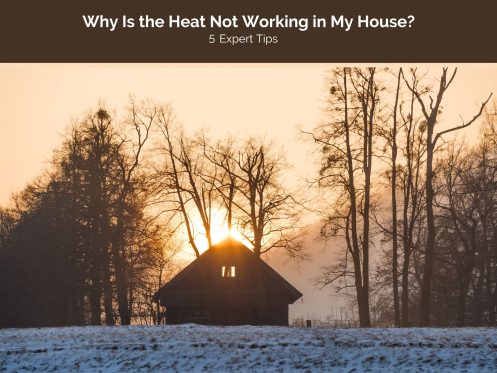
When you turn up your thermostat and nothing happens, it’s more than an inconvenience — it’s a comfort and safety concern that needs immediate attention. Understanding why the heat is not working in your house can help you decide whether you need a quick fix or professional help.
When the Heat is Not Working in Your House, Check Your Thermostat First
Before assuming the worst, verify your thermostat settings. Make sure it’s set to “heat” mode and the temperature is set higher than your current room temperature. If your thermostat uses batteries, replace them to rule out a simple power issue. Sometimes a thermostat loses its calibration or programming, causing your heating system to malfunction even when everything else works properly.
Inspect Your Circuit Breaker and Power Supply
Your heater not working might be due to an electrical issue. Check your home’s circuit breaker panel for any tripped breakers that control your heating system. Furnaces and heat pumps require substantial electrical power, and a tripped breaker can shut down your entire system. For gas furnaces, verify that the pilot light is lit and the gas supply valve remains in the “on” position.
Examine Your Air Filter
A clogged air filter ranks among the most common reasons homeowners ask, “Why isn’t my heat working?” Dirty filters restrict airflow, causing your system to overheat and shut down as a safety precaution. Replace disposable filters monthly during heavy use seasons, and clean or replace permanent filters according to the manufacturer’s recommendations.
Look for Warning Signs That Can Cause Your Heat to Stop Working in Your House
Your heating system communicates problems through specific symptoms. Strange noises, such as banging, squealing, or grinding, indicate mechanical issues that require professional diagnosis. If you smell gas near your furnace, leave your home immediately and call your gas company and a qualified HVAC technician. Unusual odors, weak airflow, or short cycling — when your system turns on and off frequently — all signal that something needs repair.
Consider Your System’s Age and Maintenance History
Heating systems typically last 15 to 20 years with proper maintenance. If your system hasn’t received annual professional maintenance, accumulated wear and tear may cause breakdowns. Neglected components like burners, heat exchangers, and blower motors fail more frequently and create safety hazards. Regular maintenance prevents most emergencies and extends your equipment’s lifespan.
When To Call a Professional
While you can safely check your thermostat, filter, and circuit breaker, many heating problems require specialized training and tools to diagnose and repair correctly. Issues involving gas lines, electrical components, refrigerant, or internal mechanical parts present safety risks that only certified technicians should handle. Professional service also ensures your system operates efficiently, keeping your energy costs down while protecting your family’s comfort and safety.
Don’t let a cold house put your family or business at risk this winter. Contact Satterlee Plumbing, Heating and Air Conditioning for fast, reliable heating repair from Joplin’s most trusted HVAC experts since 1892.