
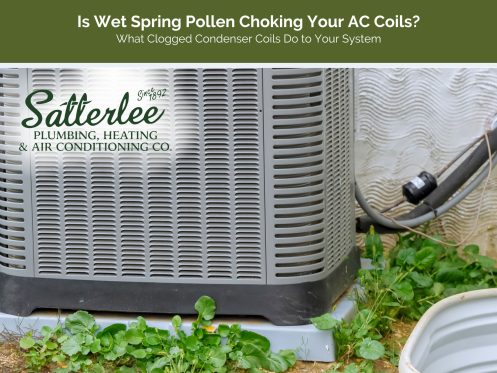
Spring in southwest Missouri brings warmer days, blooming trees — and a yellow-green film of pollen on just about every outdoor surface. Your car, your porch furniture, your windows, all of it gets coated. But there’s one surface where that seasonal buildup causes real, lasting damage: the condenser coils on your AC’s outdoor unit.
If your system has been running longer than usual or your energy bills have been climbing before summer even starts, pollen-clogged condenser coils may be behind it.
Why Spring Rain Makes Pollen a Bigger Problem
Your condenser unit is designed to pull outdoor air across its coils to release heat from inside your home. That airflow is essential. But during spring, it also means your outdoor unit is acting like a continuous pollen filter.
On dry days, loose pollen can pass through without much trouble. The problem is that spring also brings rain, and that changes everything. When moisture mixes with pollen, it creates a sticky, paste-like film that coats the condenser coil fins. These are the thin metal slats that line the exterior of the unit. As the cycle of pollen and rain repeats, layer after layer accumulates. What starts as a light dusting quickly becomes a dense, compacted mat that blocks airflow and forces your system to compensate.
What Pollen-Clogged Condenser Coils Do to Your System
When your condenser coils can’t breathe, your HVAC system works harder than it should. That added strain leads to real consequences:
Higher energy bills
- Restricted airflow means longer run cycles just to hit your thermostat’s setpoint.
Accelerated component wear
- The compressor operates under elevated pressure when heat can’t escape through the coils efficiently.
Reduced cooling capacity
- On warm days, your home may struggle to reach the temperature you’ve set.
Risk of system failure
- Prolonged overheating can damage the compressor, one of the most expensive parts to replace.
These aren’t problems you want surfacing in the middle of a Missouri summer.
What You Can Do, and What a Pro Should Handle
You can manage some basic upkeep yourself. Keep shrubs and vegetation trimmed back at least two feet from the condenser unit, and gently rinse the exterior fins with a garden hose at low pressure, directing water from top to bottom to flush debris out. Homeowners should avoid using pressure washers as the force can bend the fins and restrict airflow further.
That said, a proper HVAC cleaning requires more than a rinse. A trained technician will remove the unit’s panels, apply professional-grade coil cleaner, straighten any bent fins, inspect refrigerant levels, and check electrical components. This work protects your system’s efficiency and extends its lifespan heading into the hottest months.
Start the Cooling Season Right
Satterlee Heating and Air has been serving homeowners and businesses across Joplin, Carthage, Webb City, Neosho, and the greater southwest Missouri area since 1892. Schedule your free estimate today and let our EPA-certified technicians get your system ready before the summer heat sets in!